
Want to be informed before birth, but not sure where to start? Here are some questions to get you started.
In her book, Reclaiming Childbirth as a Rite of Passage, Dr Rachel Reed points out that women don’t need to do a course to successfully birth babies. And she is absolutely right- we have been doing it since the dawn of humanity without so much as a TikTok on the subject!
However, Rachel and I both agree that women do need to be educated about birth in our modern context.
Modern Birth Culture
We live in a time where birth has been medicalised. Medical interventions begin in pregnancy; come in many forms; and in some cases are offered to ALL women, as part of “standard care”. I wish I could say that all of these interventions were only offered when absolutely necessary, and that there is good evidence that they improve outcomes for mothers and babies.
Sadly, this is not the case.
There are countless voices from both within the maternity care system and from outside who are concerned about the rapidly rising rate of interventions, which do not correlate with improved outcomes.
Mapping for a Positive Birth
What makes a birth positive? It’s not necessarily a birth that’s “natural” and certainly not one that’s pain free. My definition of a positive birth is one in which a woman births feeling informed, empowered and supported by those around her.

A positive birth is a transformative process, and can be a beautiful and glorious rite of passage into motherhood, or into the newest chapter of motherhood.
However, it has long been understood that one in three women experience birth trauma. Further research has revealed that the majority of this trauma results from interactions with care providers, and the cascade of medical intervention. Women feel that things are being done “to” them during birth, as opposed to interventions being selected in collaboration with them.
So, it is safe to say that many women are not feeling empowered or glorious.
In this context, which does not promote women’s autonomy, it is my belief that knowledge is power.

It shouldn’t have to be that way, it shouldn’t be on the shoulders of women to become experts in the intricacies of birth and hospital policy. But I really feel that it is that way that it is right now.
And, no, we can’t control everything, but there is so much we can learn to be prepared, and to be in our power during birth.
Ok, let’s get to planning!
First and Foremost
The most impactful questions to consider, and as early a possible, are:
- Who will be my care provider? and,
- Where will I birth my baby?
There are more options out there than many women are aware of (see my article Care Providers: Part 1 for more information).
The scientific literature clearly shows that some options have much better outcomes for mothers, babies, or both.

Pregnancy and the Onset of Labour
The following are just some questions to consider when it comes to pregnancy and early labour.
- What would I want to do if I go into labour and…
- I have had a positive Group B Strep (GBS) swab?
- I have had a diagnosis of gestational diabetes (GD)?
- Do I want the screening tests for GBS and GD, or can I forgo them?
- What will I do if I am assigned a diagnosis of a “big” baby?
- What if I go into labour when the baby is in a breech position?
- What course of action would I be comfortable with if I experience:
- A pregnancy that is “post-dates”, i.e. baby is still in utero after 40 weeks?
- Pre-labour rupture of membranes (PROM i.e. waters break before contractions start)?
- Meconium stained liquor (when waters are released, there are traces of babies’ first pop in it)?
- A long labour?
These are relatively common situations, and not necessarily a problem, or pathological. Your hospital or care provider has policies in place for every one of these cases. So, another crucial question to ask is:
“What are the policies at my place of birth, and with my care provider, in each of these situations?”
Keep in mind that their policies are often culture-based, as opposed to based on scientific evidence that they achieve better outcomes. It is definitely worth doing research ahead of time to find out what’s what.
During Labour: The Three False Idols
There are three common interventions that affect almost every woman, and are so ingrained in our birthing culture- many of us have seen them in movies and TV shows growing up- that we have just accepted that they are part of labour and birth. They are:
- Routine Vaginal Exams/Cervical Checks
- CTG fetal monitoring
- Coached pushing
Writing about these three topics will form a whole blog post of their own in the future. But for now, let me suggest that you look into:
a) their efficacy in improving outcomes (spoiler alert, they don’t improve outcomes), and
b) the likelihood that they will bring on the cascade of medical intervention (again, spoilers, very likely).

The “Big” Ones
There are some medical interventions that could significantly alter the whole course of your birth, your physical recovery, your baby’s long term health and/or your breastfeeding success. These effects might be a direct result of the intervention, or an indirect result due to the cascade of other interventions that follow it. It is worth taking the time to understand the risks and benefits to the following:
- Induction of labour
- Augmentation (speeding up) of labour with synthetic oxytocin
- Epidural
- Episiotomy
- Instrumental delivery by forceps/vacuum
- Caesarean Section
Even in the case of a caesarian section, there are still opportunities for you to make decisions for your and your baby’s wellbeing. A C-Section can be a really beautiful and empowering birth. Again, it really helps if you have mapped it out ahead of time and discussed it with your care provider.
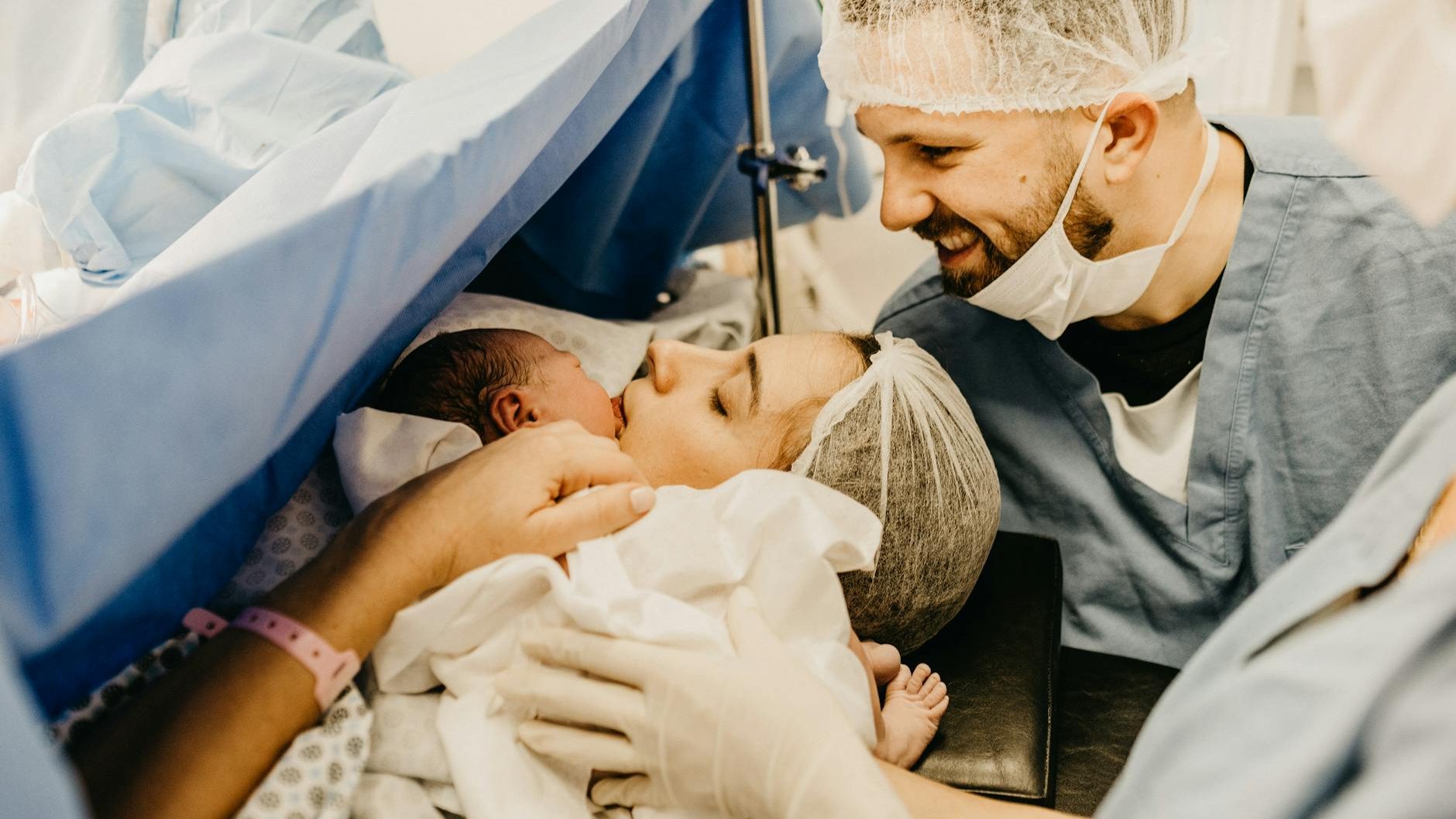
After the Baby Arrives
In the first few minutes and hours after birth are a special time for you and your baby, but also a crucial time to optimise yours and your babies’ physical health. Some considerations here are:
- What are my preferences for cord management?
- Do I want a managed or physiological third stage (i.e. do I want medication to speed up the delivery of the placenta?).
- What do I want my initial contact with my baby to look like (including skin-to-skin contact, Kangaroo Care for premature babies etc.)?
- How do I feel about my baby having prophylactic antibiotics (given as a preventative measure)?
- How do I feel about baby formula being given to my baby?
- What is my/my husband’s plan if our baby is taken to NICU and mother/baby are separated?
- When do I want my baby to receive standard vaccinations etc?

It’s important to note that I have not included anything about preparing for breastfeeding in this post, but that could be a whole article by itself. Breastfeeding after a hospital birth may not “just happen”, and should you wish to breastfeed, that will need targetedl research as well.
Where to get Informed
While it’s ideal to get all your information from scientific journals, that’s not really a possibility for most of us. In lieu of that, some excellent sources of information include:
The Great Birth Rebellion podcast
My go-to for an evidence-based deep dive on all things pregnancy and birth, hosted by Dr Melanie Jackson.
Dr Sara Wickham’s books and website
Dr Wickham has written books on a variety of topics, including induction, plus-sized pregnancy, Group B Strep, Anti-D and Vitamin K. She also has a sensational blog written from the point of view of a experienced midwife and leading researcher.
Dr Kirsten Small’s website Birth Small Talk
Evidence-Based education about CTG/ fetal monitoring from an obstetrician and leading researcher.
Dr Rachel Reed’s blog, books and courses
Dr Rachel Reed has written two highly acclaimed books, and has a collection of informative blog posts and courses available for both birth workers and families.
The Midwives’ Cauldron Podcast
An excellent resource on all things pregnancy, birth and breastfeeding, hosted by Lactation Expert and Midwife Katie James and Dr Rachel Reed
The Cochrane Database of Systematic Reviews
Cochrane produces systematic reviews to help people make informed health decisions.
Ok, I have my information… now what?
What you do with your knowledge is your decision. As everything in your birth should be.
I wrote a birth plan/map, which outlined all my decisions for as many eventualities as I could think of. I went through it with my midwife and my husband in detail, and I was confident that they knew all the intricacies of it. For me, I felt that there was no point in just me knowing the plan, I needed to be free to go into myself during labour. A bit like how the bride ensures all the vendors have the plan ahead of time, so she can enjoy her special day. We all knew my limits- what I would and wouldn’t accept in different situations.

This mapping method gave me peace and confidence, but is certainly not the best option for everyone.
Many midwives and doulas advocate for the opposite. They advise women to be well-informed, but to accept that they cannot control every aspect of their birth. They discourage “planning”.
And there is a whole spectrum in between.
Make the choice that makes you feel peaceful and powerful.
 Perth Birth Nerd
Leave a comment