🎵Circadian rhythm
And bodily wisdom
Getting euphoric in your endocrine system
Saving small babies with just cuddle-ing
These are a few of my favourite things 🎵
Today I feel like nerding out about our physiology. Our bodies are so wise, and there is true beauty in their clever design. Pretty much everything about how birth works is amazing, but these are a few of my favourite things:
1. Melatonin has a Key Role in Birth
Melatonin is a neat little hormone that is mainly produced in your brain as a result of darkness. It helps us feel sleepy and helps to establish our circadian rhythm. Did you know that this little wonder hormone is also believed to have a role in the onset of labour? Researchers believe that mammals have evolved this feature to ensure we are birthing in the safest possible environment.
I have experienced the effect of this personally. In both of my labours I was in a position where I was waiting around for contractions to start. In both cases, they kicked off when I was resting in the dark, eyes closed. Melatonin to the rescue!
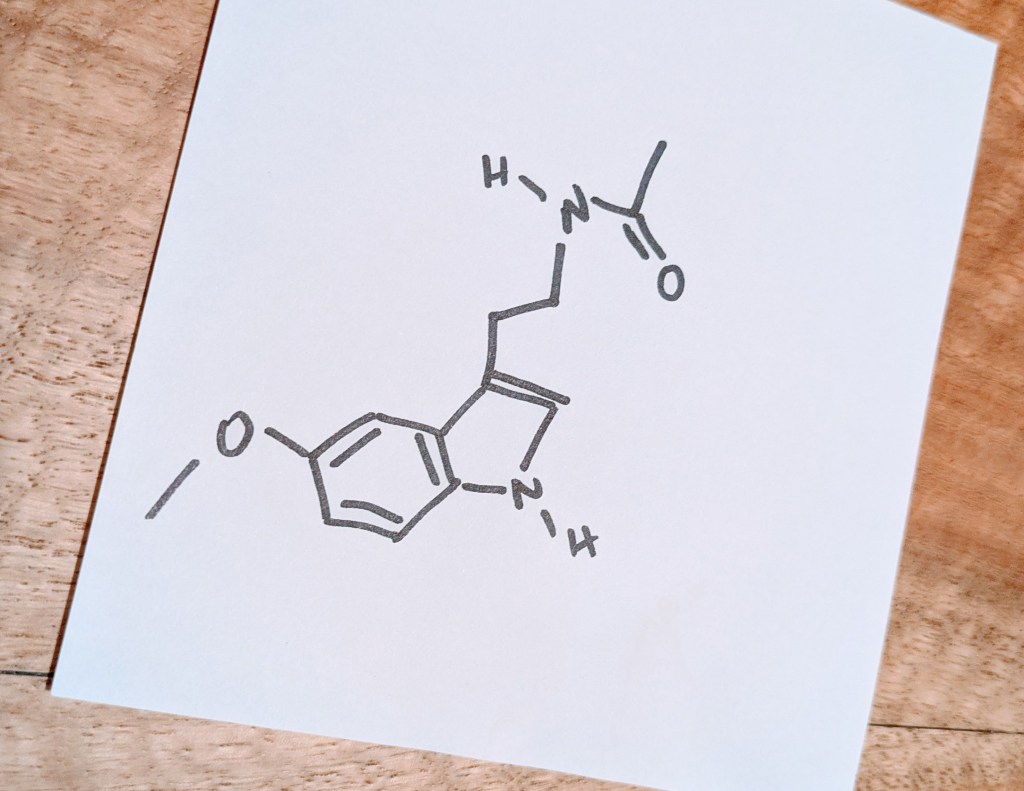
The role of melatonin in labour doesn’t just stop there! Increased levels of circulating melatonin have also been found to increase the frequency of uterine contractions.
The reason being is that it seems that oxytocin and melatonin have a synergistic relationship. In fact, in the presence of melatonin, only 1% of the usual amount of oxytocin is required to achieve full uterine contractions! So that’s a great reason to keep the lights dim and wear that blindfold during labour!
2. Skin-to-Skin Saves Lives
The benefits of immediate skin-to-skin contact between a mother and new baby have long been established. It assists with regulating baby’s breathing and temperature and it produces amazing hormones in the mother that help with recovery, bonding and milk production. Prolonging this contact is even better, and this is often called Kangaroo Mother Care. It is beautiful, and improves long-term outcomes for both baby and mother.

What has completely blown my mind, though, is the research that shows that vulnerable babies, such as babies with a very low birth weight, actually do better in skin-to-skin contact with their mothers than in the special-care nursery! Kangaroo Mother Care has been shown to reduce the rates of sepsis, hypoglycemia, hypothermia and hospital readmission. The effect is so profound that WHO recommends immediate skin-to-skin contact for babies born preterm or with a low birth weight, as opposed to waiting for bubs to become “stable”. It states that this immediate start of Kangaroo Mother Care has the potential to save 150 000 lives per year!
3. Placentas are a Team Effort
I am not sure why I love placentas so much. I suppose, to begin with, they are the amazing organs that house your baby for most of gestation.
They have two separate circulations, maternal and fetal, allowing for the exchange of nutrients, oxygen and waste, while ensuring the mother and baby’s blood never mix. It is also an endocrine organ, producing key hormones for both mother and baby.

Maybe I love them so much because of the beautiful Tree of Life formed by the blood vessels on the fetal side of the placenta.
Maybe I love them because they’re not as much our placentas as they are our babies’ placentas. When the blastocyst implants in the uterus, two-thirds of the cells form the placenta. Most of the tissue therefore carries the baby’s DNA- it is mostly your baby’s organ. Mostly, but not all- some cells are contributed by the mother too. It’s the first thing you and your baby build together!
4. Beta Endorphins: Natural Pain Relief that Gets you High
Beta endorphins are an awesome hormone group that produce an analgesic, or pain-killing, effect. At high concentrations, the effect can be as good as opioids at reducing pain during labour. As usual, our fabulous bodies know exactly when we need them; as uterine contractions increase, the beta endorphins concentration in our blood also increases. This reduces our experiences of pain and also gives us that feeling like we’re inbetween worlds. Some women even experience euphoria during labour thanks to these amazing chemicals! I am not sure I would call my personal experience euphoria, but I remember the high between contractions, being somewhere in the ether, and just a little giddy. Just writing about it makes me want to do it all again…
What about you? What are your favourite birth facts?
Key references used to produce this article:
Boundy E.O., Dastjerdi R., Spiegelman D., Fawzi W.W., Missmer S.A., Lieberman E., Kajeepeta S., Wall S., Chan G.J. (2016) Kangaroo Mother Care and Neonatal Outcomes: A Meta-analysis. Pediatrics, 137(1):e20152238. https://pmc.ncbi.nlm.nih.gov/articles/PMC4702019/
Buckley, S. (2024) Pain in labour: your hormones are your helpers. Dr Sarah Buckley. https://sarahbuckley.com/pain-in-labour-your-hormones-are-your-helpers-2/
Olcese, J. & Beesley, S. (2014) Clinical significance of melatonin receptors in the human myometrium. Fertility and Sterility, 102(2), p329-335. https://www.fertstert.org/article/S0015-0282(14)00566-4/fulltext
WHO. (2021). Kangaroo mother care started immediately after birth critical for saving lives, new research shows. World Health Organization. https://www.who.int/news/item/26-05-2021-kangaroo-mother-care-started-immediately-after-birth-critical-for-saving-lives-new-research-shows
 Perth Birth Nerd
Leave a comment